edHelper.com
Animal Themes
Animal and Biomes Basics Theme Unit

Cells


Cells
Reading Level
     edHelper's suggested reading level:   grades 4 to 8
     Flesch-Kincaid grade level:   8.89

Vocabulary
     challenging words:    existence, genetic, membrane, nucleus, surrounding, variety, species, reproduce, life, actually, mystery, material, contrary, furthermore, microscope, significant
     content words:    Robert Hooke, What Hooke, Cell Theory


Print Cells
edHelper.com subscriber options:
     Print Cells  (font options, pick words for additional puzzles, and more)

     Quickly print reading comprehension

     Print a proofreading activity


Feedback on Cells
     Leave your feedback on Cells  (use this link if you found an error in the story)


Cells   

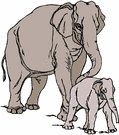
1     On our planet Earth, life comes in a variety of forms. We have about 2 million species of animals (such as elephants), 270,000 types of plants (such as sunflowers), 4,000 kinds of bacteria (such as E. coli), 80,000 different protists (such as algae), and 72,000 assorted fungi (such as mushrooms). What do all these organisms or living things have in common? As hard to believe as it is, they are made of the same thing - the cell. Some like animals and plants consist of many or even billions of cells, while others like protists and bacteria live on a single cell.
 
2     Robert Hooke was the first scientist to solve this great mystery of life. When he observed a thin slice of cork under a microscope in 1663, he noted that the cork looked like hundreds of tiny boxes or a honeycomb. Hooke called these tiny boxes "cells", which means "little rooms" in Latin. What Hooke did not realize at the time is that he was actually looking at the walls or outer layers of cells, not inside cells themselves. Nearly two hundred years had elapsed before any scientist made any new, significant break-through. The hard work put in by scientists of the 19th century derived the so-called Cell Theory:

Paragraphs 3 to 4:
For the complete story with questions: click here for printable


Copyright © 2008 edHelper