edHelper.com
Animal Themes
Birds


Gannets


Gannets
Reading Level
     edHelper's suggested reading level:   grades 3 to 6
     Flesch-Kincaid grade level:   6.87

Vocabulary
     challenging words:    binocular, hatching, incubate, lays, prime, species, spectacular, spurt, among, underwater, directly, thorough, bowing, nostril, finding, headfirst
     content words:    Atlantic Ocean, Great Britain, South Africa, New Zealand, Mediterranean Sea


Print Gannets
edHelper.com subscriber options:
     Print Gannets  (font options, pick words for additional puzzles, and more)

     Quickly print reading comprehension

     Print a proofreading activity


Feedback on Gannets
     Leave your feedback on Gannets  (use this link if you found an error in the story)


Other Languages
     Spanish: Los Alcatraces


Gannets   

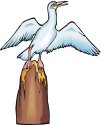
1     Gannets are among the world's best plunge divers. When gannets glide 50-100 feet above the sea, they use their binocular vision to search for fish and squids underwater. Once they find their next meal, gannets fold their wings partially and dive headfirst at an amazing speed of at least 60 miles per hour. As they plunge into water, they make such a great impact that water may spurt up to 10 feet high!
 
2     How can gannets sustain the force caused by their spectacular dives? Well, after a thorough review of gannets' anatomy, five clues emerge. First, gannets have streamlined, torpedo-shaped bodies. Second, gannets can close their pale bluish-gray beaks very tight, so water cannot enter into their mouths. Third, gannets have no nostril holes, eliminating the danger of accidentally breathing into water. Fourth, gannets have very thick skulls that act as crash helmets. Fifth, gannets have airbag-like air sacs around their necks and shoulders that inflate to protect their bodies during a plunge. With these five features, no wonder gannets are such superb divers.
 
3     There are three different species of gannets in the world. Northern gannets, nicknamed "solan geese," are the largest of all gannets. They measure about 35 inches long and weigh around 6.5 pounds. Their wingspan is approximately 6 feet. We can find northern gannets in countries around the northern Atlantic Ocean, such as Canada, Greenland, Iceland, Ireland, and Great Britain. The other two gannet species are Cape gannets of South Africa and Australasian (or Australian) gannets of Tasmania and New Zealand. Regardless of where their prime residences are, all three gannet species look alike. They all dress in white, trim their wings in black, and color their heads in yellow. Gannets are migratory birds. For example, northern gannets leave their Atlantic homes as temperatures start to drop. They spend their winter months in the Mediterranean Sea.

Paragraphs 4 to 5:
For the complete story with questions: click here for printable


Copyright © 2008 edHelper