
Worksheets and No Prep Teaching Resources
Reading Comprehension Worksheets
Animal Themes
Birds
Deserts
Animal Themes
|
Worksheets and No Prep Teaching Resources Reading Comprehension Worksheets Animal Themes Birds Deserts |
Animal Themes |
| edHelper's suggested reading level: | grades 6 to 8 | |
| Flesch-Kincaid grade level: | 7.36 |
| Roadrunners |
|
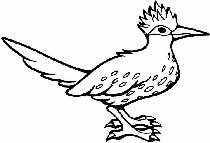 1 When driving in the deserts of the United States and Mexico, we often encounter roadrunners running at high speed in front of our vehicles. With feathers of mixed black, brown, and white, roadrunners have a dash of blue and red behind each eye. They also have bushy head feathers, called head crests, that stand up when they are curious or excited. Roadrunners can grow up to two feet long, but their tails make up half of that length. Even though they can fly, their wings are too short to carry them for more than a few seconds. As a result, when they feel threatened, roadrunners have a better chance of survival by fleeing on foot than by flying. Indeed, with a pair of long, strong legs, roadrunners can run as fast as seventeen miles per hour!
 |
Create Weekly Reading Books
Prepare for an entire week at once! |
| Leave your feedback on Roadrunners (use this link if you found an error in the story) |
|
Animal Themes
|
 |
Birds
|
 |
Deserts
|
|
|