edHelper.com
Animal Themes
Mammals
Polar Regions


Polar Bears


Polar Bears
Reading Level
     edHelper's suggested reading level:   grades 4 to 7
     Flesch-Kincaid grade level:   7.94

Vocabulary
     challenging words:    rates, maintain, therefore, encounter, hence, survival, entire, hibernators, meat-eating, running, actually, clumsy, conclude, decline, significant, pregnant


Print Polar Bears
edHelper.com subscriber options:
     Print Polar Bears  (font options, pick words for additional puzzles, and more)

     Quickly print reading comprehension

     Print a proofreading activity


Feedback on Polar Bears
     Leave your feedback on Polar Bears  (use this link if you found an error in the story)


Polar Bears   

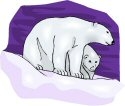
1     When we are busy taking pictures of glaciers, icebergs, and walruses in the Arctic, we may encounter the world's largest meat-eating animals on land - polar bears. Wearing white fur coats, polar bears blend perfectly into the landscape full of snow and ice all year round. Even though polar bears can weigh more than 1,000 pounds, they are not clumsy at all! They walk quietly on ice, so other animals cannot hear them approaching. They can swim for at least 60 miles without rest, and their top running speed is 40 miles per hour! If we do encounter polar bears outside of a zoo, we don't stand a good chance of survival! Therefore, it is fair to conclude that polar bears are not the animals that we want to bump into in the Arctic.
 
2     Many people may think that polar bears hibernate during the cold winter months. They actually don't - not in a true definition of hibernation, anyway. In fall, pregnant female polar bears eat a lot and start building snowy dens. Once they finish the construction of their winter homes, they stay in and take a long nap. So far, this sounds just like hibernation, right? Well, animals that undergo true hibernation experience significant drop in their heart rates. Their body temperatures also plunge to near the freezing mark (32 degrees Fahrenheit). The Arctic squirrel is a good example of true hibernators. When polar bears nap in winter, their body temperatures do decline but maintain a consistent temperature around 98 degrees Fahrenheit. Hence, scientists don't consider polar bears true hibernators.
 
3     Around November or December, pregnant female polar bears give birth to two cubs inside their dens. Both mother polar bears and their cubs continue staying in their winter homes until spring arrives. Other polar bears also build snowy dens but they don't live there for the entire winter. They only check in to rest for a short period of time when the food supply is scarce.

Copyright © 2008 edHelper