edHelper.com
Lewis and Clark
(1804-1806)


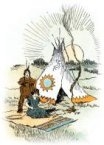
Sacagawea


Sacagawea
Reading Level
     edHelper's suggested reading level:   grades 7 to 9
     Flesch-Kincaid grade level:   8.09

Vocabulary
     challenging words:    unexplored, courageous, better, expedition, exploits, trapper, reservation, overturn, overboard, personally, slavery, beginning, exploration, tribe, rifles, trade
     content words:    Pacific Northwest, Minitaree Sioux, French Canadian, Toussaint Charbonneau, North Dakota, In June, Captain Clark, Captain William Clark, Wild West


Print Sacagawea
edHelper.com subscriber options:
     Print Sacagawea  (font options, pick words for additional puzzles, and more)

     Quickly print reading comprehension

     Print a proofreading activity


Feedback on Sacagawea
     Leave your feedback on Sacagawea  (use this link if you found an error in the story)


Sacagawea
By Mary L. Bushong
  

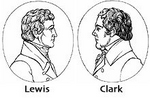
1     When the Lewis and Clark expedition went out to explore the Pacific Northwest, they were going where few, if any, whites had gone before. This country was full of unexplored wilderness. When the expedition leaders needed a guide, they chose a Shoshone woman named Sacagawea.
 
2     Little is known of her early life, but it is thought she was born between 1786 and 1790 near the present day town of Lemhi, Idaho. Among many tribes the boys were rarely disciplined so that their spirits would not be broken, but the girls were often beaten and made to do hard work. Sacagawea's tribe was poor from constant attacks by the Minitaree Sioux. As a result there was little peace among the people.
 
3     When she was about 11 years old, her village was attacked. Many of her family were killed, and she was taken captive. The Minitaree Sioux sold her to the Hidatsa-Mandans as a slave. While she was there with them, she was given the name Sacagawea (pronounced with a hard G). It was actually two words put together, Sacaga, which meant "bird", and wea, which meant "woman."
 
4     Sacagawea and another Shoshone girl were eventually sold to a French Canadian trapper, Toussaint Charbonneau. He had been living with the Mandans for some time and married both of the girls in 1804.
 
5     It was in the fall of 1804 that the Lewis and Clark expedition arrived to spend the winter with the Mandans of North Dakota. They eventually hired Charbonneau as a guide and interpreter, because he could speak Sioux. When the explorers learned that his wife Sacagawea could speak Shoshone and Sioux, they insisted that she come along to help them. Once they reached the Shoshone lands, they hoped she could help them barter for horses.
 
6     Sacagawea's baby son, Jean-Baptiste, was born on Feb. 11, 1805. When the expedition was ready to leave on April 7, 1805, she carried him in a cradleboard on her back. The explorers soon had good reason to be glad she was with them. She could identify plants for their journals and find edible fruits and vegetables.
 
7     One time, they were on a river when a strong wing came up, tipping the boats over. She rescued the precious journals, medicines and other valuable items that washed overboard. Her husband earned the scorn of the explorers by sitting frozen with fear in the boat after allowing it to overturn.
 
8     While the explorers had been impressed with her quick thinking and constant help, they did not care personally about her. In June 1805, she developed a fever, which soon became so bad the group was afraid she would die. It was only at that point that they began to understand how important she had become to their success.

Paragraphs 9 to 17:
For the complete story with questions: click here for printable


Copyright © 2008 edHelper