Down
| 1. | This desert plant is spiky! It has a thick, succulent stem to store water. |
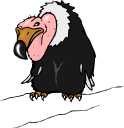
| 2. | This bird looks like an eagle. However, it has a strange habit of eating dead or decaying animals. |
| 3. | This animal is a relative of dogs and wolves. It has long, triangular ears, a narrow, pointed nose, and a long, bushy tail. Unlike wolves, this animal is a loner and it hunts for food by itself. |
| 4. | This animal has an armor covering from its head to tail. It will roll itself up into a ball to defend itself. |
| 5. | A member of the antelope family, this endangered animal can only be found in the Sahara Desert of Africa. With a pair of long, spiral horns, this animal doesn't drink water! Instead, it gets sufficient moisture from just licking dew and eating plants. |
| 6. | This poisonous animal has a long tail that can curve up and sting us! It has four pair of legs and one pair of claws. |
| 7. | With about 350,000 different species, the common name of this insect makes up the largest group of insects. Ladybugs belong to this group of insects. |
| 8. | This hairy ground spider does not build a nest to catch prey. Instead, it waits patiently in its home for a passerby. When a small animal comes near its hideout, this spider gives a quick, lethal injection to its victim before taking it back home. |
| 9. | In a desert, we can only find this in an oasis. Animals need this to survive. |
| 10. | This cactus species is the world's largest. It can grow over 50 feet tall and weigh over 2,000 pounds! It also has a life span of over 150 years! |
| 11. | When we are traveling in a desert, we can only find water in this place. |
|
|
Across
| 1. | This animal is a great survivor in the desert, because it can live for weeks without water. It has either one or two humps on its back. |
| 12. | An ecosystem that receives less than 10 inches of rainfall a year. |
| 13. | This term is used to describe a huge desert rock that has a broad, flat top and resembles a table. |
| 14. | This is the world's largest desert. |
| 15. | This tortoise lives in deserts. It spends as much as 90% of its lifetime hiding underground. During the hot summer months, it stays underground to remain cool. During the cold winter months, it stays underground to take a long nap (hibernate). (2 words - include space in puzzle) |
| 16. | This animal is the only mammal that can fly. It rests by hanging itself upside down, and it is active at night, or at dawn and dusk. |
| 17. | Some species of this animal live in deserts. This animal is a great architect specialized in building underground tunnels. Wearing a soft, silky fur, this animal has poor eyesight. It mainly relies on its nose to feel its way and find food. This animal rarely comes to the surface except to find a mate. |
| 18. | This continent has the world's largest desert - the Sahara Desert. |
| 19. | This lizard has horn-like spines on its wide, flattened body that makes it look more like a toad than a lizard. It is also known as "horned toad" or "horny toad." (2 words - include space in puzzle) |
| 20. | This snake is venomous (poisonous). It is best known for the rattling sound it makes. |
| 21. | This is the world's coldest continent. It is near the South Pole. Many scientists consider this continent to be a desert, because there is no liquid fresh water. |
| 22. | This bird lives in the desert areas of the United States and Mexico. It has bushy head feathers (called head crests) that stand up when the bird is curious or excited. This desert bird runs really fast - on average, it can speed away at 17 miles per hour. |
| 23. | We call a hill of sand this. (2 words - include space in puzzle) |
|