Sample Plate Tectonics Worksheet
Reading Comprehension Worksheets
Return to Earth Theme Unit

edHelper.com Subscribers:
Build a printable worksheet with the complete story and puzzles
Build a proofreading activity


Plate Tectonics
By Sharon Fabian
  

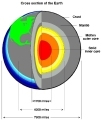
1     The earth, just like a middle schooler sitting at his desk all afternoon, is restless! Even though we think of the earth as solid and steady under our feet, it is actually moving and shifting all the time. The scientific study of this earth movement is called plate tectonics. A plate is just a huge slab of rock, and tectonics comes from an old Greek word meaning "to build." So plate tectonics is the theory that explains how the earth's surface is built up from rocky plates which are moving.
 
2     This theory is fairly new - it began in the 1960s. But even before that, scientists had the idea that the earth was always shifting. In 1912, Alfred Wegener came up with a theory called "continental drift" which said that maybe the seven continents sort of floated around on the earth. Way back in 1596, a Dutch mapmaker named Abraham Ontelius noticed that it looked like America had been "torn away from Europe and Africa." Scientists thought that, at one time, all of the continents might have been just one huge continent. They called it the supercontinent, and named it Pangaea. It may have existed around 225 million years ago. If you take a world map and cut out the continents, you can try to piece them together like a puzzle to make Pangaea.
 
3     Scientists have learned much more about these moving plates since the 1960s by studying the boundaries where the plates bump together. Since many of these boundaries are under the ocean, they use modern technology to search for clues. Sonar has been used to find out how deep the ocean is in various areas. Satellites have mapped out the boundaries of the plates, and shown how they changed over time. Magnetic strips on the ocean floor have been discovered by scientists using magnetometers.

Paragraphs 4 to 9:
For the complete story with questions: click here for printable


Copyright © 2008 edHelper