
Worksheets and No Prep Teaching Resources
Reading Comprehension Worksheets
Electricity

Electricity
|
Worksheets and No Prep Teaching Resources Reading Comprehension Worksheets Electricity |
Electricity |
| edHelper's suggested reading level: | grades 9 to 12 | |
| Flesch-Kincaid grade level: | 8.75 |
|
Electricity
By Sharon Fabian |
|
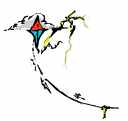 1 Static electricity was known as far back as 500 BC. The Greeks knew that amber could be made to attract small objects, like bits of a feather, by rubbing it with a piece of fur. Ben Franklin proved that lightning was electricity in 1752. But nobody knows exactly how he did his experiment. Franklin was a careful man. He would have known that flying a kite in a thunderstorm could have deadly effects. It seems there must be a little more to the story than what we usually hear. Both the ancient Greeks and Ben Franklin discovered naturally occurring electricity. Their discoveries were amazing in their time. But this kind of electricity was not really useful yet. One of the first practical uses of electricity was in Dover, England, in 1858. Electricity was first used there to power the lamp in a lighthouse.
 |
Create Weekly Reading Books
Prepare for an entire week at once! |
| Leave your feedback on Electricity (use this link if you found an error in the story) |
|
Electricity
|
 |
High School Reading Comprehensions and High School Reading Lessons
|
 |
Science
|