
Worksheets and No Prep Teaching Resources
Reading Comprehension Worksheets
Light
Light
|
Worksheets and No Prep Teaching Resources Reading Comprehension Worksheets Light |
Light |
| edHelper's suggested reading level: | grades 7 to 8 | |
| Flesch-Kincaid grade level: | 7.02 |
|
Color Mixing
By Sharon Fabian |
|
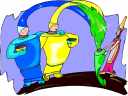 1 Did you ever wonder how paints or crayons make all of those different colors when you paint or draw? If you're thinking like a scientist, you may already suspect that it has something to do with light. The ordinary white light that we see every day is really made up of a whole rainbow of colors. All of the rainbow colors, -- red, orange, yellow, green, blue, indigo, and violet -- and all of the shades in between, are contained in ordinary sunlight. All of them mixed together make the light that we see by, which is usually called white light.
 |
Create Weekly Reading Books
Prepare for an entire week at once! |
| Leave your feedback on Color Mixing (use this link if you found an error in the story) |
|
Light
|
 |
Art Theme Unit: Reading Comprehensions
|
 |
Science
|