
Worksheets and No Prep Teaching Resources
Reading Comprehension Worksheets
Skeletal System
The Human Body
Skeletal System
|
Worksheets and No Prep Teaching Resources Reading Comprehension Worksheets Skeletal System The Human Body |
Skeletal System |
| edHelper's suggested reading level: | grades 6 to 8 | |
| Flesch-Kincaid grade level: | 6.24 |
|
Skeletal System - Healthy Bones
By Sharon Fabian |
|
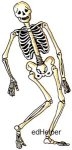
 1 There are 206 bones in the adult body. The longest one is the thighbone, or femur, which makes up about 1/4 of your height. The smallest is the stirrup bone in the ear, which is only about 1/10 of an inch long. The bones are connected by 230 joints. All of these parts of the skeletal system keep you in good shape, active, and looking good -- as long as you keep them healthy.
 |
Create Weekly Reading Books
Prepare for an entire week at once! |
| Leave your feedback on Skeletal System - Healthy Bones (use this link if you found an error in the story) |
|
Skeletal System
|
 |
The Human Body
|