edHelper.com
Disabilities


The Letter


The Letter
Reading Level
     edHelper's suggested reading level:   high interest, readability grades 3 to 5
     Flesch-Kincaid grade level:   4.59

Vocabulary
     challenging words:    attendance, azure, cerebral, coordination, diagnosis, extensive, palsy, raindrop, real-life, retardation, schooling, sleeper, therapy, windowpane, spite, maintain


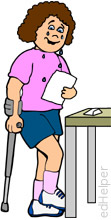
Print The Letter
edHelper.com subscriber options:
     Print The Letter  (font options, pick words for additional puzzles, and more)

     Quickly print reading comprehension

     Print a proofreading activity


Feedback on The Letter
     Leave your feedback on The Letter  (use this link if you found an error in the story)


The Letter
By Colleen Messina
  

1     Mrs. Blake looked out of the window and watched the rain. She glanced often at the mailbox, willing the mailman to come. Any day the letter might come. Any day they would have their answer! The letter would be addressed to her daughter, and if it contained good news, seventeen-year-old Karina's life would change!
 
2     The sun shone with an eerie light right through the rain clouds. Gleaming raindrop jewels danced on the windowpane. Many drops combined into a river of rain flowing down the glass. The raindrops reminded Mrs. Blake of the many tears she had shed over her daughter; tears of joy, pain, hope, and love.
 
3     Mrs. Blake thought back to when her daughter was just 18 months old. She remembered how Karina seemed slow. Mrs. Blake had had three other children before Karina, and she knew babies. Karina was different. Karina didn't grab at rattles and toys. Her azure eyes took in everything, but she didn't seem to want to crawl and explore. Her muscles seemed somehow stiff. Mrs. Blake knew something was wrong, and she took Karina to the doctor. She dressed her in a pink cotton sleeper and combed her dark, crumpled curls, as if that would make Karina well.
 
4     The doctor gently, thoroughly examined Karina. He said, "She might have cerebral palsy. I won't know until after many months of observation."
 
5     Mrs. Blake felt cold all over. She asked so many questions that it made her head spin. Surely, her daughter would get better! Surely, she would crawl, laugh, and grow, just like her other children.
 
6     Karina did not get better. At last, the doctor felt he could confirm his diagnosis. He sat down with Mr. and Mrs. Blake, gave them steaming cups of coffee, and explained Karina's problem as gently as he could. Mrs. Blake gripped her warm mug with white, icy fingers.
 
7     "Cerebral palsy is not a disease. It is a condition that affects muscles and coordination. It is caused by damage to the brain before the child is born, or because of a lack of oxygen during birth. ‘Cerebral' refers to the brain, and ‘palsy' refers to muscle weakness and poor motor control. The two terms together describe a condition where the brain can't control movement and posture. About one in 500 children has this lifelong disability. It does not get worse, but it does make normal activities a challenge.
 
8     "I am not sure what this means for your daughter. She will have problems, and she may never learn to read. I am so sorry to have to tell you all of this," said the kind, old man.
 
9     Mr. and Mrs. Blake learned as much as they could about cerebral palsy. In the years that followed, they did all kinds of things to help Karina. They got braces for her legs to help her walk. Some people with cerebral palsy can't walk at all. Others choose a wheel chair over leg braces because they feel they can do more that way. Karina received extensive physical therapy to maintain her muscles, and she received speech therapy to help her speak clearly. Fortunately, her mind was fine, but some children are not so fortunate and also suffer from mental retardation.

Paragraphs 10 to 19:
For the complete story with questions: click here for printable


Copyright © 2008 edHelper