edHelper.com
Health Professionals


Music Therapists


Music Therapists
Reading Level
     edHelper's suggested reading level:   grades 4 to 6
     Flesch-Kincaid grade level:   9.08

Vocabulary
     challenging words:    aristotle, bedside, certification, hospice, imagery, outpatient, thereby, exam, assess, communication, clinic, emotional, therapy, coordination, education, maintain
     content words:    After World War, World War II, Michigan State University


Print Music Therapists
edHelper.com subscriber options:
     Print Music Therapists  (font options, pick words for additional puzzles, and more)

     Quickly print reading comprehension

     Print a proofreading activity


Feedback on Music Therapists
     Leave your feedback on Music Therapists  (use this link if you found an error in the story)


Music Therapists
By Jennifer Kenny
  

1     When you think of health care professionals, you probably think of doctors and nurses. You might even think of dentists or chiropractors. Did you ever think to include music therapists? It may seem a little unusual, but music therapists are included in the category of health professionals.
 
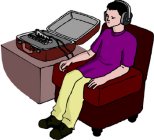
2     The power of music has been acknowledged for a long time. Aristotle and Plato, the great philosophers, wrote about health and behavior being affected by music. After World War I and World War II, musicians visited hospitals to entertain the veterans. Doctors and nurses noticed the positive effects on the patients. They started to request music programs for the veterans.
 
3     Colleges began to offer degree programs to train students. In 1944, Michigan State University offered the first program. Today, numerous colleges and universities offer accredited programs. After completing a college program, students can take a national exam to hold the MT-BC, which stands for the music therapist board certified credential.
 
4     After graduation and certification, a music therapist might be employed in a variety of settings. They might work in a medical hospital, a nursing home, or in hospice. They might work in a rehabilitation facility, an outpatient clinic, or a day care treatment center. They might hold a job in a drug and alcohol program, a psychiatric hospital, or a senior center. They might even be seen at a school, a jail, or in private practice.

Paragraphs 5 to 14:
For the complete story with questions: click here for printable


Copyright © 2008 edHelper