
Worksheets and No Prep Teaching Resources
Reading Comprehension Worksheets
Digestive System

Digestive System
|
Worksheets and No Prep Teaching Resources Reading Comprehension Worksheets Digestive System |
Digestive System |
| edHelper's suggested reading level: | grades 5 to 6 | |
| Flesch-Kincaid grade level: | 7.01 |
|
The Large Intestine
By Jennifer Kenny |
|
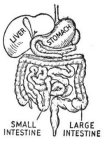 1 Digestion starts in the mouth. It then continues through the esophagus, stomach, and small intestine. Anything that hasn't already been sent to the cells in our body heads to the large intestine through the valve called the ileocaecal sphincter.
 |
Create Weekly Reading Books
Prepare for an entire week at once! |
| Leave your feedback on The Large Intestine (use this link if you found an error in the story) |
|
Digestive System
|