edHelper.com
Transportation


What's That Part?


What's That Part?
Reading Level
     edHelper's suggested reading level:   grades 5 to 7
     Flesch-Kincaid grade level:   9.57

Vocabulary
     challenging words:    hydraulic, ignition, pinion, power-steering, proportional, pulses, speedometer, tachometer, transmission, shaft, measurement, provides, voltage, electrical, lessen, indicate


Print What's That Part?
edHelper.com subscriber options:
     Print What's That Part?  (font options, pick words for additional puzzles, and more)

     Quickly print reading comprehension

     Print a proofreading activity


Feedback on What's That Part?
     Leave your feedback on What's That Part?  (use this link if you found an error in the story)


What's That Part?
By Trista L. Pollard
  

1     Have you ever go into your parents' automobile and wondered, "What is that part?" Believe it or not, even adults wonder how the parts and devices in their cars work. Unfortunately, it is not until the car breaks down that we truly find out what automobile parts do. Let's look at a few parts that people usually wonder about.
 
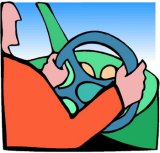
2     Most people know that without a steering wheel the vehicle will not turn. However, do they really know how a steering system works? The steering system of a vehicle includes the steering wheel, gears, and linkages that help to guide the direction of the automobile. The wheels of the car are connected to a system of gears that helps to position the front tires. These gears help to multiply or increase the force the driver needs to apply to turn the wheels of the car. Remember, there is friction between the front wheels and the road surface, so effort is needed to turn the steering wheel. Most cars have rack and pinion steering . A rack is a bar that has teeth or grooves on one side. This grooved side fits into the teeth of the pinion which is a gear. Rack and pinion steering helps to lessen the amount of effort the driver needs to apply to the steering wheel to turn the car. Larger heavier cars require a greater amount of force to turn the tires. These cars usually have power-steering . Power-steering systems have a hydraulic booster that operates when the engine is running. This booster provides the force the driver needs when turning the steering wheel. In other words, the power steering adds to the driver's effort to turn the steering wheel and therefore to turn the wheels of the vehicle.

Paragraphs 3 to 4:
For the complete story with questions: click here for printable


Copyright © 2008 edHelper