edHelper.com


Look It Up!


Look It Up!
Reading Level
     edHelper's suggested reading level:   high interest, readability grades 3 to 4
     Flesch-Kincaid grade level:   2.54

Vocabulary
     challenging words:    antonym, myoo-zik, plural, verb, alphabetical, definition, strange-looking, article, listed, opposite, meaning, magazine, print, slimy, doing, describe


Print Look It Up!
edHelper.com subscriber options:
     Print Look It Up!  (font options, pick words for additional puzzles, and more)

     Quickly print reading comprehension

     Print a proofreading activity


Feedback on Look It Up!
     Leave your feedback on Look It Up!  (use this link if you found an error in the story)


Look It Up!
By Patti Hutchison
  

1     You are reading an article in a magazine. All of a sudden you come to a word you don't know. What can you do? You can look it up in the dictionary. It's easy!
 
2     Dictionaries are books of words. They can tell us a lot of information. But they are so big! You might think it would take you forever to find the word you're looking for. But it won't, if you use the guide words.
 
3     Guide words are listed at the top of every page in the dictionary. They tell the first and last words on each page. Use what you know about alphabetical order and guide words to help you find the page your word is on.
 
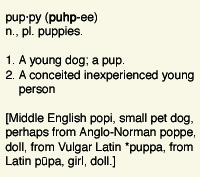
4     The words in bold print on the page are called entry words. Once you find the entry word you are looking for, you can find out a lot about it. Next to each word is a funny looking word that looks like the word you looked up. This tells you how to say the word. Use the guide at the bottom of the page, or in the front of the dictionary. It will help you figure out what all the symbols and strange-looking letters stand for.
 
5     For example, you might look up the word music. Next to it is how to say it. It might look like this: myoo-zik. If you sound this word out, you will know how to say music.
 
6     Next, is the part of speech. Your word may be a noun or a verb. It may be an adjective or adverb.
 
7     If there is an n next to your word, that means it's a noun. Nouns are naming words. They name persons, places, and things. Dog, book, and shoe are nouns.
 
8     If there is a v next to your word, that means it is a verb. Verbs are action words. They tell what something is doing. Words like run, cook, and sit are verbs.

Paragraphs 9 to 16:
For the complete story with questions: click here for printable


Copyright © 2008 edHelper