
Worksheets and No Prep Teaching Resources
Reading Comprehension Worksheets
Geography
Geography
|
Worksheets and No Prep Teaching Resources Reading Comprehension Worksheets Geography |
Geography |
| edHelper's suggested reading level: | grades 4 to 5 | |
| Flesch-Kincaid grade level: | 5.88 |
|
World on a Window Sill, Part 1
By Trista L. Pollard |
|
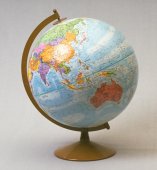 1 In classrooms everywhere, there is a "world on a window sill." Or maybe it sits on a shelf. No matter where it sits, this model is a small replica of Earth. Globes are the most accurate or correct models of our planet. They show that Earth is a sphere. If we were looking at Earth from space, we would see its round shape. All globes are shaped like spheres, even if they are different sizes.
 |
Create Weekly Reading Books
Prepare for an entire week at once! |
| Leave your feedback on World on a Window Sill, Part 1 (use this link if you found an error in the story) |
|
Geography
|