
Worksheets and No Prep Teaching Resources
Reading Comprehension Worksheets
Geography
Geography
|
Worksheets and No Prep Teaching Resources Reading Comprehension Worksheets Geography |
Geography |
| edHelper's suggested reading level: | grades 4 to 5 | |
| Flesch-Kincaid grade level: | 4.98 |
| Print World on a Window Sill, Part 2 (font options, pick words for additional puzzles, and more) |
| Quickly print reading comprehension |
| Print a proofreading activity |
|
World on a Window Sill, Part 2
By Trista L. Pollard |
|
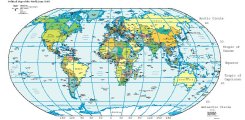 1 When you read World on a Window Sill, Part 1, you learned about globes. Now you will learn more about latitude and longitude. Why are they important, you ask? Well, latitude and longitude lines form a grid system. A grid system is a group of horizontal (east to west) and vertical (north to south) lines. These lines intersect or cross at coordinates. Coordinates are the points where the lines meet. Latitude and longitude help you to locate places on maps and globes. Remember, you won't see these lines on Earth. They are imaginary lines.
 |
Create Weekly Reading Books
Prepare for an entire week at once! |
| Leave your feedback on World on a Window Sill, Part 2 (use this link if you found an error in the story) |
|
Geography
|