
Worksheets and No Prep Teaching Resources
Reading Comprehension Worksheets
|
Worksheets and No Prep Teaching Resources Reading Comprehension Worksheets |
|
| edHelper's suggested reading level: | high interest, readability grades 3 to 4 | |
| Flesch-Kincaid grade level: | 4.01 |
|
Why Can't I Leave This On?
By Cathy Pearl |
|
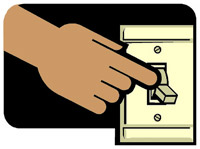 1 Taking care of your house does not only mean keeping it clean. There are other things that are important to do, too. Some of these things can even help the environment. They can also save you money. One of these things is saving electricity. You might be surprised at the little things that you can do in your house to use less electricity.
 |
Create Weekly Reading Books
Prepare for an entire week at once! |
| Leave your feedback on Why Can't I Leave This On? (use this link if you found an error in the story) |