
Worksheets and No Prep Teaching Resources
Reading Comprehension Worksheets
Geography
Geography
|
Worksheets and No Prep Teaching Resources Reading Comprehension Worksheets Geography |
Geography |
| edHelper's suggested reading level: | grades 4 to 6 | |
| Flesch-Kincaid grade level: | 6.46 |
| Print New England Subregion: Its History and People, Part 2 (font options, pick words for additional puzzles, and more) |
| Quickly print reading comprehension |
| Print a proofreading activity |
|
New England Subregion: Its History and People, Part 2
By Trista L. Pollard |
|
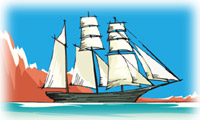 1 New England's colonies became states before 1820. Many of the colonists in New England fished and farmed. In fact, fishing was a huge industry. Many of the New England states had a strong shipping industry. Sailors from Massachusetts took their ships around the world. They sailed to China and other parts of Asia. They exported goods to these places. They also imported goods from these countries. Rhode Island provided materials for the navy. They also shipped molasses, preserved meats, cider, and dairy products. Whaling was a huge business along the New England coast. Whalers were men who went out in ships to hunt whales. Connecticut had a whaling port in Mystic. Today, you can go to Mystic, Connecticut, to see the last whaling ship. It is called the Charles W. Morgan. Its first voyage happened in 1841. This museum tells the story of whaling in Mystic.
 |
Create Weekly Reading Books
Prepare for an entire week at once! |
| Leave your feedback on New England Subregion: Its History and People, Part 2 (use this link if you found an error in the story) |
|
Geography
|