edHelper.com
The United States Grows
(1865-1900)

Rails across America - CP Conquers the Mountains


Rails across America - CP Conquers the Mountains
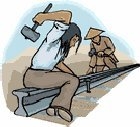
Reading Level
     edHelper's suggested reading level:   grades 7 to 9
     Flesch-Kincaid grade level:   5.7

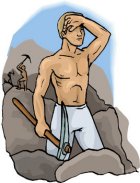
Vocabulary
     challenging words:    Collis, coolies, nitro, nitroglycerin, onsite, partake, too-heavy, train-sized, outdo, tricky, hack, hurrah, rejoice, rates, punched, bosses
     content words:    Pacific Railroad Act, Central Pacific, Collis Huntington, Mark Hopkins, Leland Stanford, Charles Crocker, Sierra Nevada Mountains, James Strobridge, Civil War, Sierra Nevada


Print Rails across America - CP Conquers the Mountains
     Print Rails across America - CP Conquers the Mountains  (font options, pick words for additional puzzles, and more)


Quickly Print - PDF format
     Quickly Print: PDF (2 columns per page)

     Quickly Print: PDF (full page)


Quickly Print - HTML format
     Quickly Print: HTML


Proofreading Activity
     Print a proofreading activity


Feedback on Rails across America - CP Conquers the Mountains
     Leave your feedback on Rails across America - CP Conquers the Mountains  (use this link if you found an error in the story)


Rails across America - CP Conquers the Mountains
By Toni Lee Robinson
  

1     How much money does it take to build a railroad across a nation? Actually, no one knew the answer to that question. But it became clear that it would be a staggering amount. Something had to be done to help railroad companies get the road built. In 1864, Congress reworked the Pacific Railroad Act. To some, it seemed that they had given away the nation to fund the railroad.
 
2     Among other things, the government gave the railroad companies more land. The CP and UP would now own about 12,800 acres per square mile along the track. They would also own mineral rights on the land. All this would help the companies raise capital to pay the enormous costs of construction.
 
3     With the Railroad Act's new provisions, big money men saw the railroad as a good place to make more money. Four men immediately joined the Central Pacific. Collis Huntington, Mark Hopkins, Leland Stanford, and Charles Crocker were known as the "Big Four." They became the directors of the CP. Their philosophy was simple. They wanted to make as much money for themselves as possible.
 
4     The Central Pacific broke ground January 8, 1863. They faced the colossal task of tunneling through a pile of solid rock--the Sierra Nevada Mountains. The work was hard and the days were long. The gold and silver fields lured workers away from the railroad. The CP was desperately short of labor.
 
5     Crocker and foreman James Strobridge weighed the problem. Crocker suggested Chinese workers. "I will not boss Chinese!" Strobridge insisted. A trial crew of Chinese workers changed Strobridge's mind. CP went on to employ as many as 12,000 Orientals. Immigrants, mostly Irish, and Civil War veterans rounded out the labor force.
 
6     White workers earned about thirty-five dollars a month and were fed by CP. The Chinese made only thirty dollars a month and had to pay for their room and board. The "coolies," as they were called, quickly became known as hard workers. They didn't seem to need breaks in the work day and hardly ever missed work because of illness.
 
7     Crocker observed that the Chinese ate lots of rice and vegetables. They also drank tea made from boiled water and bathed every day. The white workers had higher rates of illness. The Irish and others ate mostly meat and potatoes and drank water straight from local streams. Cleanliness was not a priority.
 
8     The workers, white and Chinese, chipped away at the Sierra Nevada. Progress was often only a few inches a day. Even blasting with black powder seemed to yield little gain in the battle against the stubborn rock.

Paragraphs 9 to 16:
For the complete story with questions: click here for printable


Copyright © 2009 edHelper