
Worksheets and No Prep Teaching Resources
Reading Comprehension Worksheets
The Great Depression
(1929-1945)

The Great Depression
(1929-1945)
|
Worksheets and No Prep Teaching Resources Reading Comprehension Worksheets The Great Depression (1929-1945) |
The Great Depression (1929-1945) |
| edHelper's suggested reading level: | grades 9 to 12 | |
| Flesch-Kincaid grade level: | 9.13 |
|
The Bonus Army - March on Washington
By Toni Lee Robinson |
|
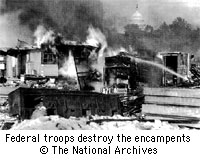 1 November 11, 1918 - Armistice Day. The War to End all Wars was over. Weary veterans came home. They left many slain companions behind and brought home a lifetime of bloody memories. The Great War had been one long horror of death and destruction. In the months that followed, soldiers and their families began the process of redefining their lives after the trauma of war.
 |
Create Weekly Reading Books
Prepare for an entire week at once! |
| Leave your feedback on The Bonus Army - March on Washington (use this link if you found an error in the story) |
|
The Great Depression (1929-1945) |
 |
High School Reading Comprehensions and High School Reading Lessons
|
 |
United States
|
|
|
 | Fifty States Theme Unit |
 |
Document Based Activities |