
Worksheets and No Prep Teaching Resources
Reading Comprehension Worksheets
A New Nation
(1776-1830)

A New Nation
(1776-1830)
|
Worksheets and No Prep Teaching Resources Reading Comprehension Worksheets A New Nation (1776-1830) |
A New Nation (1776-1830) |
| edHelper's suggested reading level: | grades 4 to 6 | |
| Flesch-Kincaid grade level: | 5.99 |
|
Robert Fulton and the Steamboat
By Jane Runyon |
|
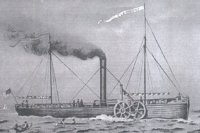 1 Robert Fulton was a man of vision. He became interested in the possibilities that a steamboat could create from a very early age. He was born in Pennsylvania in 1765. The story is told that he visited a family friend in 1777, and that is where his interest in steamboats began. He would have been only twelve years old. The Fulton's family friend had visited England. While he was there, he saw a demonstration of a new invention. It was a steam engine developed by a man named Watt. When he returned from England, he made his own version of the engine. His idea was to put it into a boat.
 |
Create Weekly Reading Books
Prepare for an entire week at once! |
| Leave your feedback on Robert Fulton and the Steamboat (use this link if you found an error in the story) |
|
A New Nation (1776-1830) |
 |
United States
|
|
|
 | Fifty States Theme Unit |
 |
Document Based Activities |