edHelper.com
The 1920's


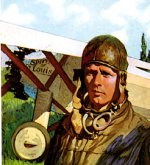
"Lucky Lindy" Takes the Bait, Part 2


"Lucky Lindy" Takes the Bait, Part 2
Reading Level
     edHelper's suggested reading level:   grades 5 to 7
     Flesch-Kincaid grade level:   4.22

Vocabulary
     challenging words:    airmail, barnstormers, bedraggled, certainty, cockpit, era-a, gauges, navigation, stalled, unclaimed, finance, aviation, ultimate, aloft, non-stop, lightweight
     content words:    Raymond Orteig, New York, Charles Lindbergh, San Diego, Ryan Aircraft, Then Lindbergh, Donald Hall, On May, Flying Fool


Print "Lucky Lindy" Takes the Bait, Part 2
edHelper.com subscriber options:
     Print "Lucky Lindy" Takes the Bait, Part 2  (font options, pick words for additional puzzles, and more)

     Quickly print reading comprehension

     Print a proofreading activity


Feedback on "Lucky Lindy" Takes the Bait, Part 2
     Leave your feedback on "Lucky Lindy" Takes the Bait, Part 2  (use this link if you found an error in the story)


"Lucky Lindy" Takes the Bait, Part 2
By Toni Lee Robinson
  

1     War pilots and barnstormers gave airplanes a start. The airmail service made them a part of everyday life. Who would take air travel to the next level? Raymond Orteig, a New York businessman, decided to raise the stakes in the aviation game. He offered a prize of $25,000 to the first person to fly non-stop between New York and Paris. The offer was first made in 1919. Several tried for the honor. Some had been killed or badly injured. Some had simply vanished over the Atlantic.
 
2     By 1927, Orteig's money was still unclaimed. Having pondered the question, "Lucky Lindy" had come to a conclusion. He was the man for the job. "Why shouldn't I fly from New York to Paris?" Charles Lindbergh later wrote of his speculations. "I have more than four years of aviation behind me, and close to two thousand hours in the air. I've barnstormed over half of the forty-eight states...Why am I not qualified for such a flight?"
 
3     All he lacked, he thought, was a plane. He told a group of St. Louis businessmen of his certainty that he could win the prize. They believed him. They put together $15,000 to finance the flight. Lindbergh had already begun the search for the right plane. He had a very clear idea what he was looking for.
 
4     The search took time. One company offered a beautiful plane for more money than Lindbergh had. No problem, the company's CEO said. They would help fund the venture. There was only one small condition. They would choose the pilot for the Paris flight. Lindbergh walked away. He hadn't come this far to watch another pilot fly to Paris.
 
5     The search for the right plane brought Lindbergh to a small company in San Diego. Ryan Aircraft was located in a former fish warehouse. At first, Lindbergh was discouraged. The building and the company seemed bedraggled. And that smell...! Then Lindbergh met Donald Hall, Ryan's new engineer. Right away, Lindbergh and Hall saw eye-to-eye. Hall approved the idea of a simple single engine plane. The two men put their heads together to design a plane that would fly from New York to Paris without stopping.

Paragraphs 6 to 11:
For the complete story with questions: click here for printable


Copyright © 2008 edHelper