edHelper.com
Colonial America (1492-1765)


The First Americans


The First Americans
Reading Level
     edHelper's suggested reading level:   grades 5 to 7
     Flesch-Kincaid grade level:   8.96

Vocabulary
     challenging words:    settled-down, wide-open, original, genuine, lifestyles, ownership, crossing, lifestyle, nomadic, writing, colonial, troublesome, unoccupied, series, agreement, widely
     content words:    Native Americans, Many Native Americans, Some Indians, Wampanoag Tribe, Iroquois Federation, Indian Wars, Christopher Columbus, West Indies, First Americans, Native American


Print The First Americans
edHelper.com subscriber options:
     Print The First Americans  (font options, pick words for additional puzzles, and more)

     Quickly print reading comprehension

     Print a proofreading activity


Feedback on The First Americans
     Leave your feedback on The First Americans  (use this link if you found an error in the story)


The First Americans
By Sharon Fabian
  

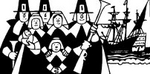
1     When the first European settlers arrived in America, they found wide-open spaces. It looked like an abundance of free land, theirs for the taking. Soon, more and more settlers were crossing the Atlantic to take advantage of the free land.
 
2     Of course, America was not an unoccupied land; it had already been occupied for a long time. A very long time.
 
3     Tribes of Native Americans already inhabited the land that we now call America. Some estimates suggest that Native Americans have lived in America for 20,000 years. The estimates vary widely, but they all agree that the number is in the thousands of years.
 
4     The Native Americans had very different lifestyles and beliefs from the settlers.
 
5     One important difference was that they did not believe in the individual ownership of land. Individual people or families did not hold deeds to their own plot of land. Many Native Americans believed that the land was theirs to use but not to own. They believed that people should use the land wisely and respectfully and leave it in good condition for the future generations. Certain pieces of land held special significance to a particular tribe. To the members of the tribe, that land was sacred.
 
6     Another difference was that many Native Americans did not practice the settled-down farming lifestyle that many of the European settlers did. Some Indians were nomadic, following buffalo herds rather than living in one place. Others grew some crops but also hunted and gathered much of their food.
 
7     A third difference was that Europeans were used to putting things down in writing. Many Native Americans passed down their important information and important legends through oral history.
 
8     One of the first Indian tribes that the settlers met in America was the Wampanoag Tribe. An agreement between the Wampanoag and the Plymouth settlers was one of the first treaties of its kind.
 
9     During colonial times, many tribes lived in the area that would become the thirteen colonies.

Paragraphs 10 to 16:
For the complete story with questions: click here for printable


Copyright © 2008 edHelper