
Worksheets and No Prep Teaching Resources
Reading Comprehension Worksheets
American Revolution

American Revolution
|
Worksheets and No Prep Teaching Resources Reading Comprehension Worksheets American Revolution |
American Revolution |
| edHelper's suggested reading level: | grades 4 to 6 | |
| Flesch-Kincaid grade level: | 9.33 |
|
The Stamp Act
By Jane Runyon |
|
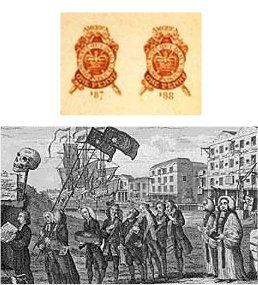 1 How would you feel if you walked into your classroom one morning and your teacher told you that you had to pay a nickel for each piece of paper you used for your work and another nickel for each page you read in your textbooks that day? That is probably a little like what the American colonists felt when they got word from England that they were going to have to pay a Stamp Tax. King George III was not happy with the independent spirit being born in the colonies. These people in the colonies needed to be held accountable for the support that England was giving them, even though the great majority of English leaders had never set foot on this soil, nor did they have any desire to do so. England had spent a lot of money protecting itself and its colonies against France and other continental armies. Its treasury was low. What better way to control the colonies and fill its coffers than to tax the very people who had left England to escape unfair treatment by the king.
 |
Create Weekly Reading Books
Prepare for an entire week at once! |
| Leave your feedback on The Stamp Act (use this link if you found an error in the story) |
|
American Revolution
|
 |
United States
|
|
|
 | Fifty States Theme Unit |
 |
Document Based Activities |