edHelper.com
The 1900's
The Assassination of President McKinley


The Assassination of President McKinley
Reading Level
     edHelper's suggested reading level:   grades 6 to 8
     Flesch-Kincaid grade level:   6.96

Vocabulary
     challenging words:    anarchist, dependencies, reelection, vice, military, presidency, abdomen, better, injury, security, bullet, death, twentieth, murder, enemy, immediately
     content words:    William McKinley, United States, William Jennings Bryan, Civil War, Republican Party, Spanish American War, Theodore Roosevelt, Puerto Rico, Leon Czolgosz, President McKinley


Print The Assassination of President McKinley
     Print The Assassination of President McKinley  (font options, pick words for additional puzzles, and more)


Quickly Print - PDF format
     Quickly Print: PDF (2 columns per page)

     Quickly Print: PDF (full page)


Quickly Print - HTML format
     Quickly Print: HTML


Proofreading Activity
     Print a proofreading activity


Feedback on The Assassination of President McKinley
     Leave your feedback on The Assassination of President McKinley  (use this link if you found an error in the story)


The Assassination of President McKinley
By Jane Runyon
  

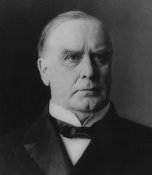
1     William McKinley was elected President of the United States in 1896. He was a Republican who defeated William Jennings Bryan in a very expensive election. McKinley had raised three and a half million dollars to spend on his campaign. He outspent his opponent and won easily.
 
2     William McKinley had started out life in Niles, Ohio. He was born there on January 29, 1843. He fought in the Civil War and became a lawyer upon his return from the war. In 1977, he was elected to Congress. He served there until 1890 when he was defeated. Two years later he was elected as Governor of Ohio. He served two terms as governor.
 
3     In 1896, the Republican Party was looking for a candidate for president. McKinley believed deeply in protecting the people and the government of the United States. He campaigned vigorously for higher tariffs, taxes, on goods being brought to this country from other countries. He believed that this would give the American working man a better opportunity to earn a living. The owners of large businesses and factories liked to hear that. That would mean more money for their businesses. It was the support of big business that won him the election.

Paragraphs 4 to 9:
For the complete story with questions: click here for printable


Copyright © 2009 edHelper