edHelper.com
World War II


V-J Day, Part 2 - "It's Over!"


V-J Day, Part 2 - "It's Over!"
Reading Level
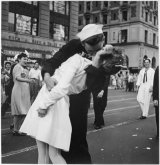
     edHelper's suggested reading level:   grades 7 to 9
     Flesch-Kincaid grade level:   7.17

Vocabulary
     challenging words:    bushido, capered, capitulation, chain-kissing, delegation, indiscriminate, madcap, merrymakers, morphed, onslaught, white-clad, publicly, antidote, deem, suicide, triumph
     content words:    Eastern Time, President Truman, Japanese Government, Pearl Harbor, White House, Times Square, On August, Japanese POWs, In Tokyo, Tokyo Bay


Print V-J Day, Part 2 - "It's Over!"
edHelper.com subscriber options:
     Print V-J Day, Part 2 - "It's Over!"  (font options, pick words for additional puzzles, and more)

     Quickly print reading comprehension

     Print a proofreading activity


Feedback on V-J Day, Part 2 - "It's Over!"
     Leave your feedback on V-J Day, Part 2 - "It's Over!"  (use this link if you found an error in the story)


V-J Day, Part 2 - "It's Over!"
By Toni Lee Robinson
  

1     America was waiting. People had been tormented for days now by rumors and speculations. How much longer could it take? The time must be near. False announcements of peace had brought frustration and an aching yearning for an end to the senseless destruction of war. The night of August 13, 1945, Americans were doomed to go to bed as they had for over three years, with the tyranny of war hanging over their heads.
 
2     Early the next morning, there were more reports of possible capitulation. On the west coast, ham radio operators swore they had picked up bits of a Japanese radio broadcast stating that the enemy nation was ready to agree to surrender. Radio listeners groaned and tried to put the tantalizing prospect out of their minds. They went about their workdays keeping a firm lid on hope. Newspapers of the day failed to bring an antidote for disappointment. Most harped again on the endless, maddening hesitation of Japanese officials.
 
3     Some of the late editions began to strike a different note. In some cities, they began to announce surrender. Was it another false alarm? At supper tables across America, families sat quietly, eating their evening meal. They listened with half an ear to the evening's radio offerings. For the umpteenth time in the last two days, they heard the fussy voice of the announcer breaking in. "We interrupt this broadcast to bring you..." Could this be it? It was impossible not to hope. Once again, the nation held its breath.
 
4     At 7:00 p.m., Eastern Time, President Truman was announced. Around the world, people were glued to their radio sets. The President's thin, firm voice began: "I have received this afternoon a message from the Japanese Government... I deem this...a full acceptance of [the terms of] the unconditional surrender of Japan...Arrangements are now being made for the formal signing of surrender terms at the earliest possible moment." The homes and streets of the U.S. erupted in shouts of joy. "This is the day we have been waiting for since Pearl Harbor," the President went on to say. "This is the day when Fascism finally dies, as we always knew it would."
 
5     The people of America agreed. They took to the streets to celebrate. The nation indulged in manifest silliness. Sober, responsible adults morphed into impulsive pranksters. In a small Midwestern town, the local fire chief, a staid father of ten, turned the city fire hose on passersby. Drenched, hilarious victims wrested the hose away and returned the shower. On the White House lawn in Washington, spontaneous conga lines wriggled and kicked.

Paragraphs 6 to 11:
For the complete story with questions: click here for printable


Copyright © 2008 edHelper