
Worksheets and No Prep Teaching Resources
Reading Comprehension Worksheets
The 1900's

The 1900's
|
Worksheets and No Prep Teaching Resources Reading Comprehension Worksheets The 1900's |
The 1900's |
| edHelper's suggested reading level: | grades 6 to 8 | |
| Flesch-Kincaid grade level: | 6.54 |
|
A Comet Captured on Film
By Jane Runyon |
|
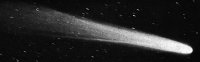 1 The world was witness to a rare event in 1910. Halley's Comet was seen and photographed for the first time ever. Do you know the correct way to pronounce Halley? Today the preferred pronunciation rhymes with the word valley. A sometimes used pronunciation is "Hail-e." Halley's Comet has been making an appearance above Earth for quite a long time. Chinese astronomers recorded sightings of the comet as early as 240 B.C. They reported a bright light in the sky followed by a sparkling tail.
 |
Create Weekly Reading Books
Prepare for an entire week at once! |
| Leave your feedback on A Comet Captured on Film (use this link if you found an error in the story) |
|
The 1900's
|
 |
United States
|
|
|
 | Fifty States Theme Unit |
 |
Document Based Activities |