edHelper.com
The 1950's
War on Disease, Part 1 - Attacking Polio


War on Disease, Part 1 - Attacking Polio
Reading Level
     edHelper's suggested reading level:   grades 7 to 9
     Flesch-Kincaid grade level:   7

Vocabulary
     challenging words:    full-strength, halted, poliomyelitis, primeval, killing, onset, polio, outbreak, unprepared, forge, invaders, urgent, response, solution, risky, incidence
     content words:    President Franklin D., Franklin Roosevelt, National Foundation, Infantile Paralysis, Grace Kelley, Elvis Presley, Singer Eddie Cantor, Jonas Salk


Print War on Disease, Part 1 - Attacking Polio
     Print War on Disease, Part 1 - Attacking Polio  (font options, pick words for additional puzzles, and more)


Quickly Print - PDF format
     Quickly Print: PDF (2 columns per page)

     Quickly Print: PDF (full page)


Quickly Print - HTML format
     Quickly Print: HTML


Proofreading Activity
     Print a proofreading activity


Feedback on War on Disease, Part 1 - Attacking Polio
     Leave your feedback on War on Disease, Part 1 - Attacking Polio  (use this link if you found an error in the story)


War on Disease, Part 1 - Attacking Polio
By Toni Lee Robinson
  

1     Science made some important leaps into the future during the 1950s. One breakthrough was the vaccine against polio. Poliomyelitis is a virus that attacks the spinal cord. It is highly contagious. It can cause paralysis and ultimately death, when its victims can no longer breathe. The disease is also called infantile paralysis since it strikes children more often than adults.
 
2     Polio is a primeval killer. Ancient drawings and writings describe children crippled from its deadly effects. Through time, polio has terrorized the world in wave after wave of outbreaks. Each wave was worse than the last.
 
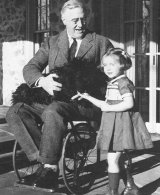
3     Polio's most high profile victim in the U.S. was President Franklin D. Roosevelt. He contracted the disease in 1921. Through great effort of will, Roosevelt survived, but his legs were withered and useless. He was handicapped for the rest of his life.
 
4     In the polio outbreak that began in 1916, 27,000 people in the U.S. were paralyzed, and 9,000 more died. Many who lived could no longer breathe without mechanical help. They had to spend at least part of each day in an iron lung. Scientists worked frantically to find a cure for polio. In one case, the panic to stop the disease led to tragedy. A vaccine thought to be safe was rushed into trials. Several cases of polio were actually induced in children by the injections. At least nine died. Testing of the vaccine was halted for more than ten years.
 
5     In the early 1950s, the dreaded disease struck again, even more cruelly than before. More than 58,000 people suffered from the virus. Many thousands died, and more were maimed. Money was poured into research to find a way to stop the frightening illness. Franklin Roosevelt founded the National Foundation for Infantile Paralysis, a group dedicated to funding the fight against polio.

Paragraphs 6 to 13:
For the complete story with questions: click here for printable


Copyright © 2009 edHelper