edHelper.com
The 1950's


War on Disease, Part 2 - New Weapons


War on Disease, Part 2 - New Weapons
Reading Level
     edHelper's suggested reading level:   grades 7 to 9
     Flesch-Kincaid grade level:   7.58

Vocabulary
     challenging words:    dead-virus, heart-lung, hypothermic, inactivate, irony, reexamined, simian, beating, determined, polio, hailed, legacy, tricky, inmate, better, infectious
     content words:    Albert Sabin, Soviet Union, Iron Curtain, United States


Print War on Disease, Part 2 - New Weapons
edHelper.com subscriber options:
     Print War on Disease, Part 2 - New Weapons  (font options, pick words for additional puzzles, and more)

     Quickly print reading comprehension

     Print a proofreading activity


Feedback on War on Disease, Part 2 - New Weapons
     Leave your feedback on War on Disease, Part 2 - New Weapons  (use this link if you found an error in the story)


War on Disease, Part 2 - New Weapons
By Toni Lee Robinson
  

1     Some children given the Salk vaccine had come down with polio. The vaccine used for the injections had been produced in several batches by different companies. A study revealed that the suspect injections had come from one batch. The company which had produced the bad batch hadn't been careful in its methods. The polio virus hadn't been fully killed before it was used. The children injected with that batch of vaccine had received live polio virus.
 
2     The terrible irony of the incident stunned the nation. How could any vaccine be trusted? But records showed that up to 90 % of children injected with properly prepared vaccine were able to resist polio. Slowly, people began to accept the fact that a careless process had caused the tragic results, rather than a flaw in the design of the vaccine. Parents breathed a sigh of relief. Once again, children lined up to get their "polio shots."
 
3     The dead-virus vaccine had drawbacks. One was that it produced a weaker strain of antibodies. The vaccine's power had to be "boosted" every few years with another injection. No one, least of all children, looked forward to more shots.
 
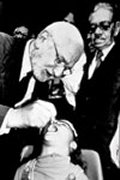
4     Scientists continued to pursue the enemy disease. Albert Sabin had become a scientist after coming to the U.S. from Poland at the age of 15. Sabin worked to develop a vaccine based on live polio virus. He used chemicals to inactivate only the infectious elements in the virus. In most cases, this prevented the vaccine from transmitting the disease. Sabin tested his oral vaccine on prison inmate volunteers. The results were encouraging. The antibodies produced in response to the live virus were strong and active.
 
5     Next, Sabin and his research team used themselves as guinea pigs. When the vaccine proved successful, larger trials were approved. In 1957, the Soviet Union and other Iron Curtain countries dispensed Sabin's vaccine to millions of their citizens. Officials in the United States approved the Sabin vaccine in the early 1960s. For a time, it was the treatment of choice for the prevention of polio. In 2000, it was declared that the war against polio had been won. The disease had been wiped out in the U.S. Since that time, live vaccine, with its greater power and greater risks, has not been used in America.

Paragraphs 6 to 12:
For the complete story with questions: click here for printable


Copyright © 2008 edHelper