
Worksheets and No Prep Teaching Resources
Reading Comprehension Worksheets
The 1900's

The 1900's
|
Worksheets and No Prep Teaching Resources Reading Comprehension Worksheets The 1900's |
The 1900's |
| edHelper's suggested reading level: | grades 6 to 8 | |
| Flesch-Kincaid grade level: | 7.22 |
|
Watch Out, Here Comes a Horseless Carriage
By Jane Runyon |
|
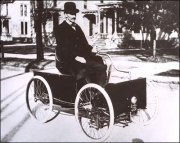 1 Before the 1900's, man had to pretty much depend on his own two feet or animal power to get from place to place. Advances in transportation had been made. Robert Fulton had invented a steam engine. This engine was now used to propel boats up and down the Mississippi River as well as on oceans. Using steam to propel a land vehicle had been a success on overland trains. But stoking a fire to make steam for a vehicle for personal use just didn't seem feasible. Inventors had tried with little success.
 |
Create Weekly Reading Books
Prepare for an entire week at once! |
| Leave your feedback on Watch Out, Here Comes a Horseless Carriage (use this link if you found an error in the story) |
|
The 1900's
|
 |
United States
|
|
|
 | Fifty States Theme Unit |
 |
Document Based Activities |