
Worksheets and No Prep Teaching Resources
Reading Comprehension Worksheets
Native Americans
Native Americans
|
Worksheets and No Prep Teaching Resources Reading Comprehension Worksheets Native Americans |
Native Americans |
| edHelper's suggested reading level: | grades 7 to 9 | |
| Flesch-Kincaid grade level: | 6.79 |
|
The French and Indian War, Part 3
By Mary Lynn Bushong |
|
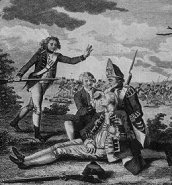 1 Over the next two years, the French lost frontier posts at Fort Niagara and then the Fortress of Louisbourg at the mouth of the St. Lawrence. From that point, the British could control much of what was meant to go to Quebec City. That included food supplies as well as military reinforcements. They also captured Fort Frontenac, this gave them control of Lake Ontario. In the middle of that same summer of 1758, Brig. General John Forkes took a contingent of men to try to take Fort Duquesne where the war's first skirmish had occurred. He succeeded and then held peace talks with the region's Iroquois. They all agreed to peace with Britain and left the French without allies.
 |
Create Weekly Reading Books
Prepare for an entire week at once! |
| Leave your feedback on The French and Indian War, Part 3 (use this link if you found an error in the story) |
|
Native Americans
|
 |
High School Reading Comprehensions and High School Reading Lessons
|
 |
United States
|
|
|
 | Fifty States Theme Unit |
 |
Document Based Activities |