edHelper.com
Black History and Blacks in U.S. History

Leaders in the Judicial Branch


Leaders in the Judicial Branch
Reading Level
     edHelper's suggested reading level:   grades 5 to 7
     Flesch-Kincaid grade level:   10.14

Vocabulary
     challenging words:    magistrate, politician, conservative, restrictive, illegal, administration, effective, nomination, civil, segregation, especially, despite, while, clerk, student, advisor
     content words:    First Federal Judge, William Henry Hastie, Harvard University, Harvard Law Review, Howard University Law School, President Roosevelt, Federal District Court, Virgin Islands, President Truman, Third US Circuit Court


Print Leaders in the Judicial Branch
edHelper.com subscriber options:
     Print Leaders in the Judicial Branch  (font options, pick words for additional puzzles, and more)

     Quickly print reading comprehension

     Print a proofreading activity


Feedback on Leaders in the Judicial Branch
     Leave your feedback on Leaders in the Judicial Branch  (use this link if you found an error in the story)


Leaders in the Judicial Branch
By Sharon Fabian
  

1     
First Federal Judge

 
2     While William Henry Hastie was a student at Harvard University, he served on the staff of the Harvard Law Review. After his graduation, he went into private practice as a lawyer and served on the faculty of Howard University Law School. Then, in 1932, President Roosevelt appointed Hastie as an advisor in his administration. In 1933, he became a lawyer with the Department of the Interior. In 1937, President Roosevelt appointed him a judge of the Federal District Court in the Virgin Islands. He was the first African-American to become a federal magistrate. After a few years, he chose to return to his work as a law professor.
 
3     Then, in 1946, Hastie was appointed governor of the Virgin Islands, and in 1949, the new president, President Truman, appointed him judge of the Third US Circuit Court of Appeals. This also was the highest judicial appointment for an African-American up to that time.
 
4     
First Female Federal Judge

 
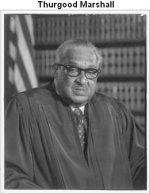
5     Constance Baker Motley graduated from law school in 1946 and went to work as a law clerk for Thurgood Marshall. Soon, she had passed the bar and was ready to practice law on her own. She became a civil rights lawyer for the Legal Defense Fund. Working for the Legal Defense Fund, she had the opportunity to argue civil rights cases before the Supreme Court.

Paragraphs 6 to 12:
For the complete story with questions: click here for printable


Copyright © 2008 edHelper