
Worksheets and No Prep Teaching Resources
Reading Comprehension Worksheets
The 1940's

The 1940's
|
Worksheets and No Prep Teaching Resources Reading Comprehension Worksheets The 1940's |
The 1940's |
| edHelper's suggested reading level: | grades 7 to 9 | |
| Flesch-Kincaid grade level: | 7.77 |
|
The Age of Computers Begins
By Jane Runyon |
|
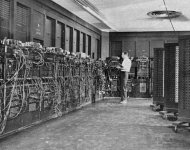 1 People have always needed math skills. Archeologists have found evidence of the need for these skills as far back as 30,000 B.C. to 20,000 B. C. Bones that old have been discovered with notches carved into them that were used for counting.
 |
Create Weekly Reading Books
Prepare for an entire week at once! |
| Leave your feedback on The Age of Computers Begins (use this link if you found an error in the story) |
|
The 1940's
|
 |
High School Reading Comprehensions and High School Reading Lessons
|
 |
United States
|
|
|
 | Fifty States Theme Unit |
 |
Document Based Activities |