edHelper.com
Black History and Blacks in U.S. History
Lewis and Clark
(1804-1806)
York: Explorer/Slave


York: Explorer/Slave
Reading Level
     edHelper's suggested reading level:   grades 9 to 12
     Flesch-Kincaid grade level:   7.14

Vocabulary
     challenging words:    curiossity, payday, snarls, chiefly, merchandize, mid-thirties, much-needed, cholera, willed, fascination, skittish, unfounded, workhorse, triumphant, somewhat, sanitation
     content words:    Native American, Bitterroot Mountains, Those Lewis, Sergeant Floyd, William Clark


Print York: Explorer/Slave
     Print York: Explorer/Slave  (font options, pick words for additional puzzles, and more)


Quickly Print - PDF format
     Quickly Print: PDF (2 columns per page)

     Quickly Print: PDF (full page)


Quickly Print - HTML format
     Quickly Print: HTML


Proofreading Activity
     Print a proofreading activity


Feedback on York: Explorer/Slave
     Leave your feedback on York: Explorer/Slave  (use this link if you found an error in the story)


York: Explorer/Slave
By Toni Lee Robinson
  

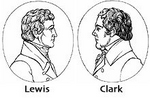
1     "York, Clark's black slave." "My man York." Accounts of the Lewis and Clark journey nearly always list York by his lowly status as servant or slave. If the first black American explorer had a first name, it is never listed. Slaves often didn't have two names. But first name or not, York played an important part in the historic voyage.
 
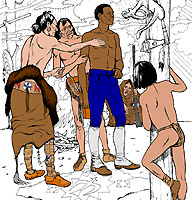
2     The black man's large stature and dark coloring proved a source of endless fascination for the Native American people along the way. Black people were an entirely new experience for the American natives. When they were sure it was safe, they would crowd around him, touching his skin and hair. In the Mandan village, children brought handfuls of sand and scrubbed York's skin with it. They had a hard time believing that the dark coloring was natural and couldn't be scrubbed off.
 
3     York enjoyed the curiosity of the native people. He played with the children and sometimes told tall tales about himself. Clark's journal relates that York told a group of Arikaras that he was a wild creature caught and tamed by Clark. With appropriate leaps, snarls and growls, he described how he used to catch and eat people, finding young children especially tasty. Clark was somewhat alarmed at this joke. From the reaction of the listeners, he felt it might be too frightening to be a good influence on relations with the tribe.
 
4     The remainder of the voyage seemed to prove Clark's fears unfounded. York's presence never failed to favorably impress whatever tribe the voyagers met. At one point, Lewis had finally found the Shoshone, for whom he had been searching. The Corps needed to buy horses from the tribe in order to make the passage over the Bitterroot Mountains. But the Shoshone had suffered attack after attack by other tribes. They were frightened and very shy. Those Lewis had finally cornered were skittish, afraid that the strange white men were somehow conspiring with their enemies to trap them.

Paragraphs 5 to 12:
For the complete story with questions: click here for printable


Copyright © 2009 edHelper