edHelper.com
Spanish American War (1898)


A Long Way from Home — A Story of the Spanish American War, Part 1


A Long Way from Home — A Story of the Spanish American War, Part 1
Reading Level
     edHelper's suggested reading level:   high interest, readability grades 4 to 5
     Flesch-Kincaid grade level:   3.03

Vocabulary
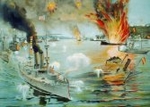
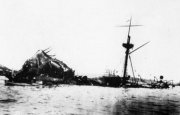
     challenging words:    brawl, drilling, joker, regiment, sheer, journal, corkscrew, good-sized, maine, snappy, unit, someplace, waltz, evenings, chief, inspection
     content words:    Lawson Parker, Montana Volunteers, San Francisco, In Helena, Camp Mud, Montana Guard, Fort Harrison, Tom Cooney, Then Colonel Kessler, Governor Smith


Print A Long Way from Home — A Story of the Spanish American War, Part 1
edHelper.com subscriber options:
     Print A Long Way from Home — A Story of the Spanish American War, Part 1  (font options, pick words for additional puzzles, and more)

     Quickly print reading comprehension

     Print a proofreading activity


Feedback on A Long Way from Home — A Story of the Spanish American War, Part 1
     Leave your feedback on A Long Way from Home — A Story of the Spanish American War, Part 1  (use this link if you found an error in the story)


A Long Way from Home — A Story of the Spanish American War, Part 1
By Toni Lee Robinson
  

1     Journal of Lawson Parker, 1st Montana Volunteers
 
2     May 25, 1898—Off to war!
 
3     It's finally happened. We're going to war! I'm sitting here on the train, rattling toward San Francisco. We're shipping out by sea from there. The big wigs of this outfit say we're headed to the Philippines. We wanted to go to Cuba. That's where the big brawl will be. But right now I'm happy as a dog with two tails. We're finally going someplace. When we get there, with any luck, we'll do something besides marching in the mud. We've been doing the mud waltz for about a month now.
 
4     I guess it's because we started training early. We were called up when it began to look like there was sure to be a dust-up with Spain. The U.S. got into the war at the end of April. In Helena, where we were stationed, the snow hadn't even started melting. May is early spring in Montana. When it began to thaw, we changed the name of our site to Camp Mud. We drilled in the mud, ate in the mud, slept in the mud. After a couple of weeks, we'd have faced a hell-bent stampede if we could've got shut of this mud!
 
5     At this minute, we're clattering through the Rockies, headed west. We crossed Marias [Muh RYE us] Pass a bit ago. It's over 5,200 feet high. We're in the high wild country. We really do go through the mountains. There are tunnels carved in the rock. The scenery is prettier than a speckled pup in a red wagon. There are high peaks all around us. Below us is a sheer drop down into a lake. The water looks like clear green crystal. Up here, the rails are bare, but everything else is still covered with snow.
 
6     The track goes around some dandy curves. The train is curled around like a corkscrew! If I look out the window, I can wave at the guys ten cars back as we pass them.
 
7     May 26, 1898—On the train
 
8     We're all excited to be on our way. This is what we've been waiting for since the U.S.S. Maine was sunk at Havana, Cuba. Over 260 sailors died that day. The Navy says they don't know who did it. The newspapers say it was Spain. After all, they're the ones who don't want us meddling in their fight with the Cuban natives. Besides, the news has been full of stories of what the Spanish are doing in Cuba. I wouldn't treat a dog like the stories say they are doing! People in Montana are madder than a bag full of bobcats. All of us are ready to go whup the Spanish ourselves.

Paragraphs 9 to 18:
For the complete story with questions: click here for printable


Copyright © 2008 edHelper