| |
challenging words: |
|
cloudy, assignment, diagram, funnel, lowest, rotation, vortex, warning, museum, drills, longer, swirl, winds, scary, sounded, drawing |
| |
content words: |
|
National Weather Service, Tornado Tube |
1 It was a cloudy, grey day. It was rainy and windy. The children watched the lightning through the classroom window. Some of the students began to get scared. Mrs. Kim decided it was a good time to discuss storm safety.
2 "I see that some of you are getting nervous about the weather," started Mrs. Kim.
3 "I don't like storms," said Tammy. "They are scary."
4 "I don't like them, either," added Ryan. "The thunder is really loud."
5 "Are we going to have a bad storm?" asked David.
6 "The National Weather Service has an office at the airport," began Mrs. Kim. "It is their job to watch the weather. They use radar and people to watch what is happening."
7 "How does that help?" asked Faye.
8 "Scientists look at the radar pictures and listen to the weather watchers," answered Mrs. Kim. "If they think conditions are right for a big storm, they issue a thunderstorm watch. If a storm does form, they will issue a thunderstorm warning."
9 "So a watch means they are watching for a storm to happen," said Joe. "And a warning is telling us that a storm is on the way."
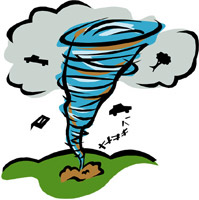
10 "That's right," said Mrs. Kim. "A tornado sometimes forms when cold air and warm air meet."
11 "What is a tornado?" asked Tim.
Paragraphs 12 to 32:
For the complete story with questions: click here for printable