
Worksheets and No Prep Teaching Resources
Reading Comprehension Worksheets
Careers in Science
Labor Day

Careers in Science
|
Worksheets and No Prep Teaching Resources Reading Comprehension Worksheets Careers in Science Labor Day |
Careers in Science |
| edHelper's suggested reading level: | grades 5 to 8 | |
| Flesch-Kincaid grade level: | 7.6 |
|
What Does a Geneticist Do?
By Cindy Grigg |
|
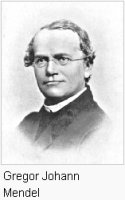 1 Scientists who study genetics study genes and heredity: how certain characteristics are inherited by offspring because their parents had these characteristics. Do you have the same eye color as your mother or father? Do twins run in your family? These characteristics, or traits, are inherited. They are passed from your parents to you by genes. Genes contain DNA that occupies a specific place on a chromosome. DNA determines a specific trait in the organism. Even the fact that you were born a boy or a girl was determined by genes. DNA is found in the nucleus of each cell. When a baby is made, one cell from the father joins with one cell from the mother. This tiny cell contains all the information stored in DNA to make a new person - you! If you are a boy, you were given DNA from your father containing a "Y" chromosome. If you are a girl, you were given DNA from your father containing an "X" chromosome. Your mother could only give you an X chromosome. Girls have two X chromosomes, and boys have an X and a Y chromosome. The information in the DNA you inherited from your parents also determined what color of eyes you would have, the color of your hair, the type of ear lobes you have, and whether or not you can roll your tongue.
 |
Create Weekly Reading Books
Prepare for an entire week at once! |
| Leave your feedback on What Does a Geneticist Do? (use this link if you found an error in the story) |
|
Careers in Science
|
 |
Labor Day
|
 |
Science
|