edHelper.com
Water


Stream Systems


Stream Systems
Reading Level
     edHelper's suggested reading level:   high interest, readability grades 4 to 6
     Flesch-Kincaid grade level:   4.47

Vocabulary
     challenging words:    bedrock, watershed, volume, directly, downhill, creeks, rainwater, destination, banks, sheets, longer, beneath, form, slope, flow, surface
     content words:    Grand Canyon, Niagara Gorge, Niagara Falls, Mississippi River, Rocky Mountains, North America, Continental Divide, Atlantic Ocean, Pacific Ocean


Print Stream Systems
edHelper.com subscriber options:
     Print Stream Systems  (font options, pick words for additional puzzles, and more)

     Quickly print reading comprehension

     Print a proofreading activity


Feedback on Stream Systems
     Leave your feedback on Stream Systems  (use this link if you found an error in the story)


Stream Systems
By Patti Hutchison
  

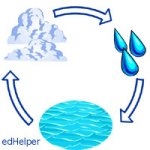
1     What happens to rainwater after the rain stops? Some of it evaporates. Some of it soaks into the ground. Sometimes the ground is full. No more can soak in. If the land has a slope, the water runs downhill.
 
2     At first it flows in sheets. Eventually it collects in a small channel. A channel is a groove in the earth's surface. As the water flows through it, it carves a path in the bedrock underneath. Channels usually form high up in the mountains.
 
3     Sometimes the water in the channel dries up soon after the rain. But when it rains again, it will fill with water. The groove becomes wider and deeper. It gets longer. As more water enters the channel, a stream will form.
 
4     A stream is a body of water that flows downhill. On steep slopes the water flows very fast. At first, the path might not be clear. As more water enters the stream, it carves a deeper groove into the bedrock. Stream banks are formed. They hold the water in the channel. You may have stood on a stream bank and skipped rocks over the water.

Paragraphs 5 to 12:
For the complete story with questions: click here for printable


Copyright © 2008 edHelper