edHelper.com
Water


Where Does Your Water Come From?


Where Does Your Water Come From?
Reading Level
     edHelper's suggested reading level:   high interest, readability grades 4 to 6
     Flesch-Kincaid grade level:   4.88

Vocabulary
     challenging words:    drilling, geothermal, affected, zone, piped, supplied, easily, groundwater, pores, supplies, likely, affects, irrigate, depend, rely, often


Print Where Does Your Water Come From?
edHelper.com subscriber options:
     Print Where Does Your Water Come From?  (font options, pick words for additional puzzles, and more)

     Quickly print reading comprehension

     Print a proofreading activity


Feedback on Where Does Your Water Come From?
     Leave your feedback on Where Does Your Water Come From?  (use this link if you found an error in the story)


Where Does Your Water Come From?
By Patti Hutchison
  

1     Water is something we all take for granted. When we turn on the tap, water comes out. We depend on fresh water for many things. In our country each of us uses about 160 gallons a day. But did you know that only about three percent of all the water on the surface of our planet is fresh water? It's a wonder we don't run out!
 
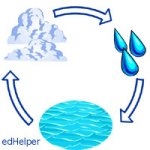
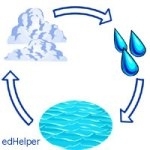
2     The reason we don't run out is because of the water cycle. Rain and snow keep us supplied with fresh water. Some of the rain runs off into streams and lakes. But most of it seeps into the ground. It is collected far beneath the surface and becomes groundwater.
 
3     How does this happen? As the water soaks into the earth it passes through layers of soil and rock. Particles that have large spaces between them let the water pass through quickly. These types of materials such as sand and gravel are said to be permeable.
 
4     The water continues down through the layers until it finds a layer of rock that is impermeable. That means that water can't pass through it easily. This layer is called the confining bed. The water continues to fill up all the pores above this layer. The place where all the pores are filled is called the zone of saturation.

Paragraphs 5 to 14:
For the complete story with questions: click here for printable


Copyright © 2008 edHelper