edHelper.com
Careers in Science
Labor Day
Ecologist


Ecologist
Reading Level
     edHelper's suggested reading level:   grades 6 to 8
     Flesch-Kincaid grade level:   9.88

Vocabulary
     challenging words:    non-living, dependent, negative, burning, cutting, atmosphere, objective, lifetime, statistics, entire, death, maintain, boulder, remain, economics, geology
     content words:    Atlantic Ocean


Print Ecologist
     Print Ecologist  (font options, pick words for additional puzzles, and more)


Quickly Print
     Quickly print reading comprehension


Proofreading Activity
     Print a proofreading activity


Feedback on Ecologist
     Leave your feedback on Ecologist  (use this link if you found an error in the story)


Ecologist
By Cindy Grigg
  

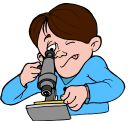
1     An ecologist studies how living things interact with each other and with their environment. An ecologist doesn't just study fish, for instance. They study the fish, water, sunlight, its food supply, things that eat the fish, and every possible thing that might affect the fish in its lifetime. Ecologists study specific areas called ecosystems.
 
2     The word ecosystem is short for ecological system. An ecosystem is a system of living things interacting with their environment. An ecosystem includes all of the living organisms in a specific area. But an ecosystem also is the way the plants and animals interact with non-living things in the system such as weather, soil, sun, and the atmosphere. The way an ecosystem develops is completely dependent upon the energy that moves in and out of the system. You could have an entire ecosystem underneath a boulder. On the other hand, you could be talking about the overall ecosystem of the planet Earth.
 
3     An ecosystem can be as small as a puddle or as large as the Atlantic Ocean. An ecosystem is a whole community of different living organisms and their surroundings. Trying to understand an ecosystem is no easy task. Since humans, animals, and plants are in steady interaction with each other, they are all constantly changing aspects of the environment.

Paragraphs 4 to 8:
For the complete story with questions: click here for printable


Copyright © 2009 edHelper