edHelper.com
Water


Continents Adrift


Continents Adrift
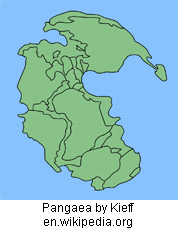
Reading Level
     edHelper's suggested reading level:   high interest, readability grades 5 to 7
     Flesch-Kincaid grade level:   6.3

Vocabulary
     challenging words:    brittle, geologic, northward, controversy, jigsaw, theory, continental, lifetime, possibility, presented, rotation, mass, scientist, during, earth, separate
     content words:    South America, Alfred Wegener, Atlantic Ocean, Appalachian Mountains, South Pole


Print Continents Adrift
edHelper.com subscriber options:
     Print Continents Adrift  (font options, pick words for additional puzzles, and more)

     Quickly print reading comprehension

     Print a proofreading activity


Feedback on Continents Adrift
     Leave your feedback on Continents Adrift  (use this link if you found an error in the story)


Continents Adrift
By Patti Hutchison
  

1     We don't notice the earth changing much during our lifetime. A volcano or earthquake might change the land a bit. But in geologic time, the earth is changing quickly.
 
2     Do you know that Africa and South America are moving farther apart? Other movements are also taking place. The theory of continental drift helps to explain these events.
 
3     Mapmakers were the first to think about drifting continents. They made the first maps in the late 1500s. They noticed how the continents might have once fit together. It looked sort of like a jigsaw puzzle. Scientists studied the possibility of this drifting for years.
 
4     Alfred Wegener presented his ideas in 1912. He called his theory continental drift. He believed that the continents were once joined together. They were a single land mass.
 
5     Wegener called this giant continent Pangaea. This is a Greek word. It means "all the earth." He believed Pangaea began to break apart 200 million years ago. He studied fossils and other data to support his ideas.

Paragraphs 6 to 13:
For the complete story with questions: click here for printable


Copyright © 2008 edHelper