
Worksheets and No Prep Teaching Resources
Reading Comprehension Worksheets
Matter
Plant and Animal Cells
Matter
|
Worksheets and No Prep Teaching Resources Reading Comprehension Worksheets Matter Plant and Animal Cells |
Matter |
| edHelper's suggested reading level: | grades 5 to 7 | |
| Flesch-Kincaid grade level: | 5.2 |
|
Egg-citing Osmosis
By Cindy Grigg |
|
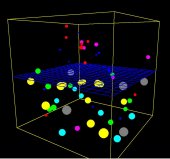 1 Osmosis is the movement of water from a region of high water concentration through a semi-permeable membrane to a region of low water concentration. Semi-permeable means that the membrane lets certain substances pass through it into and out of the cell. Osmosis is an important topic in biology because it is the main way that water is transported into and out of cells. Osmosis is a type of passive transport. The cell does not need to use any energy to carry out osmosis.
 |
Create Weekly Reading Books
Prepare for an entire week at once! |
| Leave your feedback on Egg-citing Osmosis (use this link if you found an error in the story) |
|
Matter
|
 |
Plant and Animal Cells
|
 |
Science
|