
Worksheets and No Prep Teaching Resources
Reading Comprehension Worksheets
|
Worksheets and No Prep Teaching Resources Reading Comprehension Worksheets |
|
| edHelper's suggested reading level: | grades 6 to 9 | |
| Flesch-Kincaid grade level: | 8.84 |
|
The Greatest Storms on Earth, Part II
By Trista L. Pollard |
|
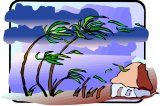 1 In the article, The Greatest Storms on Earth, Part I, you learned some background information about hurricanes. Now we will discuss how hurricanes form and decay. The easiest way to describe a hurricane is to compare it to an engine that needs continuous heat to work. For hurricanes, this heat comes from the condensation of large amounts of warm water vapor. When this water vapor is condensed, the heat is released into the air. This heated air gives the hurricane the buoyancy or lift it needs to move over oceans and land. As this process occurs, there is an area of low pressure near the surface. When there is low pressure, this means that air is rising. In the case of a hurricane, the air is rising rapidly. In contrast, areas of high pressure occur when air is sinking. Hurricanes need the warm, moist tropical air to build strength and to continue their journey across the oceans towards land.
 |
Create Weekly Reading Books
Prepare for an entire week at once! |
| Leave your feedback on The Greatest Storms on Earth, Part II (use this link if you found an error in the story) |
 |
High School Reading Comprehensions and High School Reading Lessons
|