
Worksheets and No Prep Teaching Resources
Reading Comprehension Worksheets
|
Worksheets and No Prep Teaching Resources Reading Comprehension Worksheets |
|
| edHelper's suggested reading level: | grades 4 to 5 | |
| Flesch-Kincaid grade level: | 5.68 |
|
The Monster Storm
By Trista L. Pollard |
|
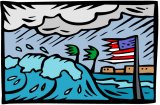 1 Our weather can change daily. One day it could be clear and sunny, and the next day you could have clouds and rain. There are also moments when you may have severe weather. Hurricanes are a form of severe weather. They are violent storms that have whirling or rotating winds. Winds are the movement of air over the Earth's surface. This air moves from areas of high pressure to areas of low pressure. These winds are called sustained winds because they move at a certain speed during the entire storm. In fact, meteorologists, or scientists who study weather, are the people who calculate sustained winds. They find the average wind speed of a storm during a period of one minute. Hurricane winds travel 74 miles per hour or more. Some of the worst hurricanes in history had wind speeds of 155 miles per hour or more. Keep in mind, these winds are different from the wind gusts you feel on a chilly fall day.
 |
Create Weekly Reading Books
Prepare for an entire week at once! |
| Leave your feedback on The Monster Storm (use this link if you found an error in the story) |