
Worksheets and No Prep Teaching Resources
Reading Comprehension Worksheets
Earth Science
Earth Science
|
Worksheets and No Prep Teaching Resources Reading Comprehension Worksheets Earth Science |
Earth Science |
| edHelper's suggested reading level: | grades 8 to 9 | |
| Flesch-Kincaid grade level: | 9.14 |
|
Pebbles to Mountains
By Trista L. Pollard |
|
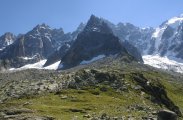 1 Before you pick up that rock, you should know that it has traveled a long way. It is amazing that we take these important substances for granted. If you were to examine a rock closely, you might observe more than one mineral or solid particle within its internal structure. Or you might find a rock that appears to have a smooth and glass-like composition. Geologists are the scientists who classify rocks and analyze the processes that form rocks on our planet. Rocks give scientists information about the environments where they were formed. Since rocks are a huge portion of the Earth's crust we see around us, it is important for us to understand how they form.
 |
Create Weekly Reading Books
Prepare for an entire week at once! |
| Leave your feedback on Pebbles to Mountains (use this link if you found an error in the story) |
|
Earth Science
|
 |
High School Reading Comprehensions and High School Reading Lessons
|