
Worksheets and No Prep Teaching Resources
Reading Comprehension Worksheets
Science Process Skills
Science Process Skills
|
Worksheets and No Prep Teaching Resources Reading Comprehension Worksheets Science Process Skills |
Science Process Skills |
| edHelper's suggested reading level: | grades 5 to 7 | |
| Flesch-Kincaid grade level: | 9.65 |
|
The Measures of Science
By Trista L. Pollard |
|
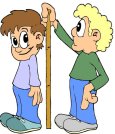 1 Imagine a world where we did not know the boiling point of water. What if we could not record growth of plants and animals? How would you know the weekend had begun if you could not keep count of days, weeks, and months? Measurement has been an important part of our lives for centuries, and it is the reason that scientists can compare objects and events quantitatively. Scientists rely on measuring to describe comparisons numerically by using standard tools, models, scaling, sampling, and estimating.
 |
Create Weekly Reading Books
Prepare for an entire week at once! |
| Leave your feedback on The Measures of Science (use this link if you found an error in the story) |
|
Science Process Skills
|
 |
Science
|