
Worksheets and No Prep Teaching Resources
Reading Comprehension Worksheets
Earth Science

Earth Science
|
Worksheets and No Prep Teaching Resources Reading Comprehension Worksheets Earth Science |
Earth Science |
| edHelper's suggested reading level: | grades 9 to 10 | |
| Flesch-Kincaid grade level: | 9.09 |
|
Column of Time
By Trista L. Pollard |
|
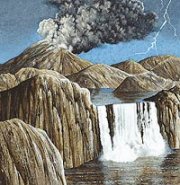 1 The secret of our planet's history lies buried in millions of year's worth of sediment. Every fossil, amber, imprint, and gastrolith waits to be studied by eager paleontologists. Before these scientists could draw conclusions about the Earth's past, they needed to develop a standard scale. This scale would help paleontologists to describe the sequence and length of our planet's geological and environmental changes.
 |
Create Weekly Reading Books
Prepare for an entire week at once! |
| Leave your feedback on Column of Time (use this link if you found an error in the story) |
|
Earth Science
|
 |
High School Reading Comprehensions and High School Reading Lessons
|