
Worksheets and No Prep Teaching Resources
Reading Comprehension Worksheets
Earth Science

Earth Science
|
Worksheets and No Prep Teaching Resources Reading Comprehension Worksheets Earth Science |
Earth Science |
| edHelper's suggested reading level: | grades 8 to 9 | |
| Flesch-Kincaid grade level: | 9.88 |
|
Measuring the Shake
By Trista L. Pollard |
|
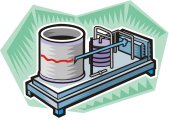 1 We know the Earth moves under our feet occasionally. So how do scientists measure and study this movement? Enter the seismologist. This scientist is responsible for studying and measuring earthquakes that occur on Earth. They use instruments called seismographs to detect and record ground vibrations produced by quakes. Today's seismographs have three components or three sensing devices. The vertical ground motion is recorded by one device. Horizontal motion is recorded by the other two devices; one for east-west motion and one for north-south motion. When an earthquake occurs, the seismograph traces wave-shaped lines onto a paper. The motion can also be transmitted through electronic signals. If it is sent electronically, then the signals are recorded on magnetic tape or loaded into a computer. This gives scientists the opportunity to analyze the seismic activity from the quake. Seismograms are the tracing of the motion produced by earthquakes and recorded on seismographs.
 |
Create Weekly Reading Books
Prepare for an entire week at once! |
| Leave your feedback on Measuring the Shake (use this link if you found an error in the story) |
|
Earth Science
|
 |
High School Reading Comprehensions and High School Reading Lessons
|