
Worksheets and No Prep Teaching Resources
Reading Comprehension Worksheets
Ancient China
Ancient China
|
Worksheets and No Prep Teaching Resources Reading Comprehension Worksheets Ancient China |
Ancient China |
| edHelper's suggested reading level: | grades 7 to 9 | |
| Flesch-Kincaid grade level: | 6.72 |
| Print Lao Tzu (font options, pick words for additional puzzles, and more) |
| Quickly print reading comprehension |
| Print a proofreading activity |
|
Lao Tzu
By Vickie Chao |
|
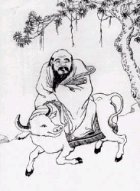 1 For a long time, from the 11th century B.C. to 771 B.C., China was like a federated state with the Zhou dynasty being the predominant player. In the early days of this dynasty, things were great. Its first few rulers were compassionate and fair. Under their leadership, the society was prosperous and peaceful. But unfortunately, the good days did not last forever. By the time that the 12th king, Zhou Youwang, ascended the throne in 781 B.C., the Zhou dynasty was already in turmoil. To make matters worse, Zhou Youwang had absolutely no interest in governing. All he cared about was having fun. Sometime during his reign, probably around 779 B.C., he met a beautiful girl named Baosi and fell in love with her right away. To indulge her, he abdicated his queen and gave the title to her. This promotion, which made the couple's son the new heir apparent, certainly pleased the young girl, but she still looked rather gloomy and hardly smiled. Hoping to see her laugh, Zhou Youwang thought to play a prank on his vassals by lighting up all the beacons. When the vassals saw the fires, they quickly prepared their troops and rushed to the designated meeting place for rescue. As they all arrived in haste, they looked disheveled and out of breath. Seeing how confused the soldiers were, Baosi finally broke a smile. Several years later, in 771 B.C., a western tribe invaded the Zhou dynasty. To raise the alarm, Zhou Youwang lit up the beacons once again. But no vassals came. They all thought it was a joke. In the end, Zhou Youwang was killed. And Baosi disappeared without a trace. After that disaster, Zhou Pingwang moved the administration to a new location and re-established the Zhou dynasty. Historians called the era before the invasion the Western Zhou dynasty and the era after that the Eastern Zhou dynasty (770 B.C. - 256 B.C.)
 |
Create Weekly Reading Books
Prepare for an entire week at once! |
| Leave your feedback on Lao Tzu (use this link if you found an error in the story) |
|
Ancient China
|
 |
High School Reading Comprehensions and High School Reading Lessons
|
 |
Social Studies
|